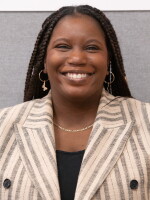
Maya Gwynn
Hi, this is Maya Gwynn, host of Black Perspectives IE, and I'm here with some background information about our show today. As you may know, today is Thanksgiving, and for generations, Americans have been taught a romanticized version of this holiday, one that celebrates friendships between European settlers and Indigenous people while leaving out the realities of colonization, genocide, and the attempted erasure of Indigenous communities, the story we're most familiar with begins in 1621 when English settlers and members of the Wampanoag Nation gathered in Plymouth, Massachusetts, for a three-day harvest celebration. But there's much more to that story. By the time the settlers arrived, Indigenous communities had already experienced devastating population losses from diseases introduced through European contact, the settlers established their colony on Patuxet, a Wapanoag village whose people had been devastated by the epidemic.
One of the most significant figures in history was Tisquantum, also known as Squanto. In 1614, he was kidnapped by an Englishman and sold into slavery in Spain, after eventually making his way back to New England, he discovered that his community had been devastated. He later helped the English settlers survive by teaching them how to grow crops, fish, and navigate relationships with neighboring native communities.
The gathering in 1621 wasn't the friendly, mutually invited celebration we've been taught to imagine in school. Historical accounts suggest the Wampanoag arrived after hearing gunfire from the settlers. And despite relying on Indigenous knowledge and assistance to survive, European colonists viewed Native people through a lens of racial and cultural superiority, often treating them as inferior and less than human. This wasn't the beginning of an annual holiday. It was a harvest celebration shaped by survival, political alliances, and unequal power. In the years that followed, colonization brought land theft, forced displacement, genocide, and devastating violence against Indigenous communities.
Thanksgiving became an annual national holiday in 1863, when President Abraham Lincoln issued a proclamation during the Civil War. With the country deeply divided, Lincoln hoped the observance would help bring Americans together and foster national unity. Today, many Indigenous people observe Thanksgiving as a National Day of Mourning, honoring their ancestors and remembering the ongoing consequences of colonization. To explore this history and complexities of navigating Black and Indigenous identities, I'm joined by Chiree Rice-Coplin, a Black and Indigenous woman and member of the Muscogee (Creek) Nation.
With KVCR Public Media, I'm Maya Gwynn with Black Perspectives IE, a show where we learn about the amazing things members of the Black community are doing in the Inland Empire. My guest today is Chiree Rice-Coplin, community health worker at the San Manuel Indian Clinic. Thank you so much for being here.
Chiree Rice-Coplin
Thank you for having me.
Maya Gwynn
Of course. As a Black and Muskogee (Creek) Nation woman, you carry identities that have their own distinct histories in America, but also histories that intersect in ways that aren't always acknowledged. How has navigating both identities shaped your understanding of race and ancestry, in your point of view?
Chiree Rice-Coplin
Definitely through like the generational traumas, like learning about that first, and seeing how it still is kind of happening today, and we're still kind of continuing traumas. But I think us young people are doing a great job of breaking stigmas and generational traumas.
Maya Gwynn
I'm curious because in school I learned about Thanksgiving obviously in ways that didn't really happen. But as someone who is Indigenous, where were you learning those lessons from? Was it from family members? Was it from your own education that you had to do?
Chiree Rice-Coplin
I learned like the school teachings. I really never got like the full like - you know, they would just be like, that's not even like half the truth. It's totally wrong. They did them dirty, you know. And I'm like, okay. So like that was in the back of my head. So then when I got older -
Maya Gwynn
Who's telling you it was wrong?
Chiree Rice-Coplin
Oh, my older cousins. 'Cause they're doing their own research because they're in school and they were just like, wrong. When I got older, like learning about the native people that that happened, it was like okay, like this was definitely wrong. Like, should we be celebrating Thanksgiving? I don't know.
Maya Gwynn
Yeah. What were you learning when you educated yourself? What were the resources you looked at?
Chiree Rice-Coplin
The internet. That was it until I got to college, and I was able to ask other Native people, like the Native American Student Programs Office. Love them, shout out to them. So yeah, I was learning from the different students, the staff.
Maya Gwynn
I love that. This episode will air on Thanksgiving, and I wanted to explore how Indigenous people are often remembered as a part of America's past, rather than recognized as a present. How does the traditional Thanksgiving narrative contribute to that erasure, in your opinion? And what do you wish non-native people in America better understood about Indigenous people today?
Chiree Rice-Coplin
I think it's the lack of truth and the lack of wanting to acknowledge the truth in what happened. We're still here, even though there was a lot of wanting to erase us. I see a lot of language programs happening for my tribe, for my nation specifically. We have like a whole language program. They're doing a You Speak, I Speak Program now, and so I'm trying to learn, but yeah, but I think it's really important that like that's one of the things that we - among all the other things - but like, language because that's one of the things they didn't want us to continue. We're still here, y'all didn't get rid of us.
Maya Gwynn
Yeah, and the story that we always hear is that it was pilgrims. It was Indigenous people. They sat down and they had - they broke bread and had dinner. That goes into my next question: colonization, forced assimilation, and government policies have disrupted the transmissions of Indigenous languages, traditions, and cultural practices across generations. Within your own Muscogee (Creek) Nation heritage, what does cultural preservation look like today, in your opinion?
Chiree Rice-Coplin
Definitely the language programs we have, the dancing workshops, the sewing, the beading, and I think that's not just specific for my nation, but there's a lot of teachers out there now, and I like how the younger generations are learning too, so it's exciting to see you know like the willingness and like the excitement of like I want to learn like how to do this.
Maya Gwynn
Yeah, that's amazing. We're gonna move to our rapid-fire portion, so I'm excited to hear your answers. If your work or just your whole vibe had a theme song, what would it be?
Chiree Rice-Coplin
Something from like Jhené, her new album.
Maya Gwynn
Westside Whimsy? So good. If you had to teach a master class or give a TED talk on a random skill you have besides the work that you already do, what would it be?
Chiree Rice-Coplin
Marketing. That's what I went to school for.
Maya Gwynn
Okay. And do you have a favorite Inland Empire restaurant or landmark that reminds you of the Inland Empire.
Chiree Rice-Coplin
I'll just say UCR.
Maya Gwynn
Okay. No one said a school yet. I love that. And how can people keep up with you and support the work that you're doing?
Chiree Rice-Coplin
So, my work page is on Instagram. It's chw.sm. We have different workshops. We have events, and we also post the events that we go to as well.
Maya Gwynn
Okay, awesome! Thank you so much for being here.
Chiree Rice-Coplin
Thank you for having me.
Maya Gwynn
Of course, Chiree Rice-Coplin is a Community Health Worker at the San Manuel Indian Clinic. Find this segment and others at kvcr.org/bpie. To directly support the segment, visit kvcr.org/bpiedonate. Support for this segment comes from the M.E.C.C.A IE Fund at the Inland Empire Community Foundation, advancing racial equity and supporting long-term investments in Riverside and San Bernardino counties. Join us again next week for Black Perspectives IE. For KVCR Public Media. I'm Maya Gwynn. Thank you.